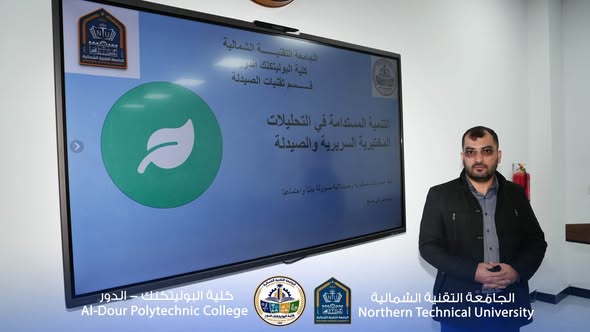
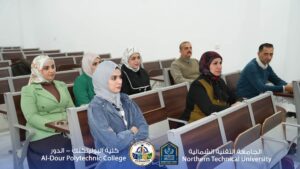
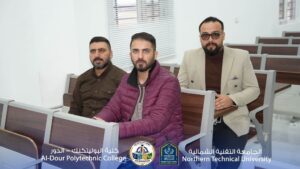
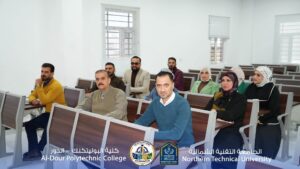
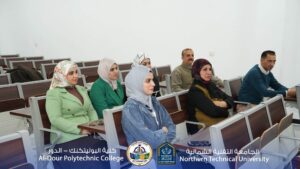
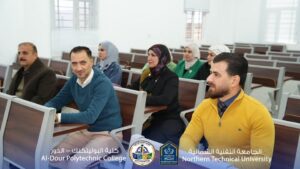
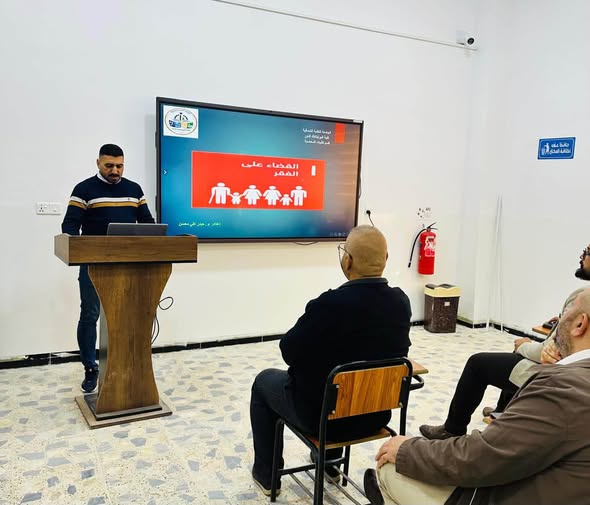
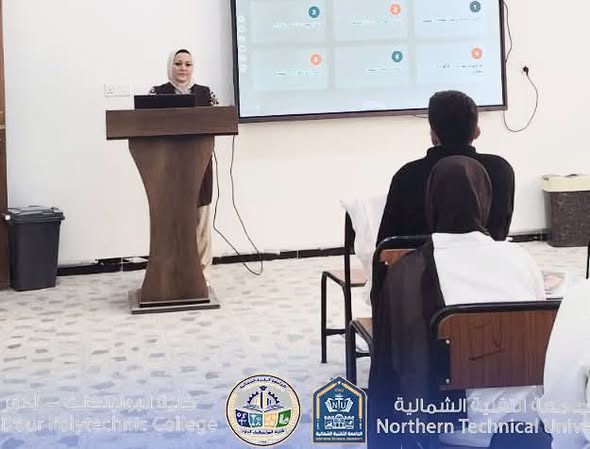
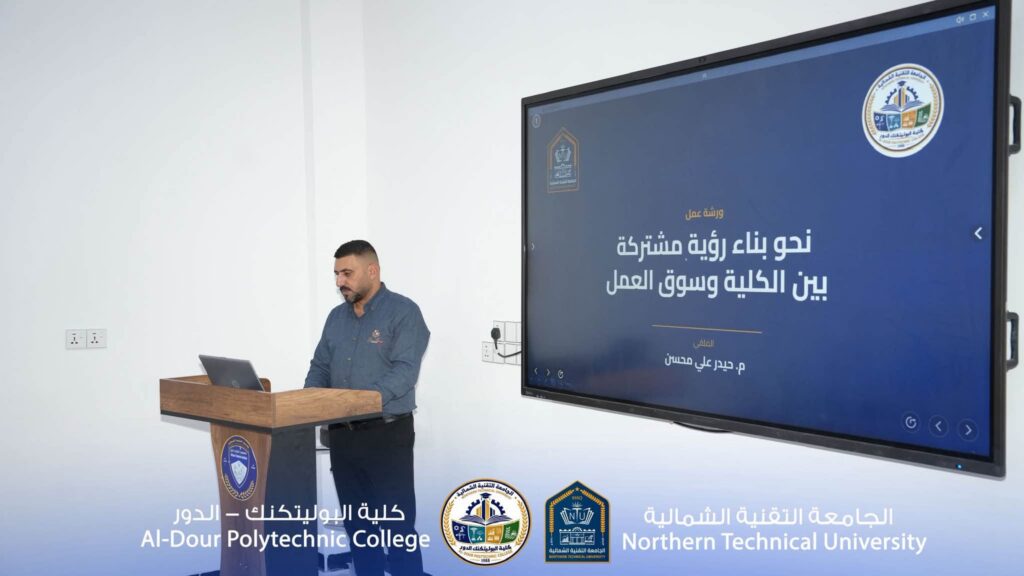
Under the patronage of the respected University President and supervised by the esteemed Dean of the Faculty, the Department of Pharmacy Technologies, through the Quality Assurance and University Performance Division and as part of the Sustainability Program, organized a course during this November entitled Sustainable Development in Clinical Laboratory Analyses and Pharmacy.
It was delivered by Assistant Lecturer Sadeem Zaki Saleh, a faculty member in the department above, and was attended by a number of college members.
The course aimed to:
General Objective: To build awareness and capacities among clinical laboratory and pharmacy staff to adopt sustainable professional practices that protect health and the environment without compromising the quality of outcomes or patient safety.
Detailed Objectives:
• Clarify the concept of sustainable development, its dimensions, and its seventeen goals.
• Identifying sources of environmental impact in the clinical laboratory and pharmacy.
• Familiarize yourself with the principles of green chemistry, green analysis, and their laboratory applications.
• Using simple measures to assess the effectiveness of analytical methods.
• Applying the principles of sorting, processing, and safe disposal of waste and medicines.
• Preparing an actionable action plan in the workplace.
The session also produced several recommendations with the most important of which are:
1. Institutional policy: Adopting a sustainability policy in the laboratory and pharmacy, and assigning a committee or coordinator to follow up on it.
2. Streamlining tests: Reviewing duplicate and unnecessary requests in collaboration with doctors, and adopting evidence-based application protocols.
3. Green methods: Preference for methods with lower consumption of reagents and solvents and evaluate them with standards such as AGREE, ensuring quality requirements are met.
4. Waste management: Adopting a documented system for sorting, processing, and disposing of waste through licensed entities, and preventing the discharge of hazardous materials into the sewage.
5. Medicines: Organizing programs to recover unused medicines, improve inventory management, and promote the rational use of medicines.
6. Training and follow-up: Incorporating sustainability into ongoing training and curricula, and monitoring annual indicators for waste, water, and energy.